Construction injury and safety statistics: A complete overview


Trusted by 100,000+ organizations across the globe


Construction remains one of the most dangerous industries in the world. From falls and equipment-related injuries to fatalities caused by struck-by or caught-in incidents, the risks are real and persistent.
This blog presents the most up-to-date construction injury statistics, safety facts and site injury rates available. Organized for quick reference and citation, these stats are ideal for anyone interested in learning more about construction safety, risk prevention or workforce protection.
A quick snapshot of construction safety statistics
According to the CDC in 2024, construction accounts for 1 in 5 workplace deaths in the U.S.1 Below are some key statistics that highlight safety and injury for the construction industry:
- The construction injury rate is approximately 2.5 per 100 full-time workers.2
- Falls remain the leading cause of death on construction sites.3
- Small construction firms (with <10 employees) account for over 50% of all construction fatalities.4
- The fatal injury rate in construction is nearly 3x higher than the all-industry average.5
Construction injury and fatality statistics
These statistics offer a high-level overview of construction-related injuries across the industry:
- In 2023, U.S. construction workers experienced approximately 1,075 fatal injuries on the job.6
- The BLS (Bureau of Labor Statistics) measured a fatal work injury rate of 9.6 deaths per 100,000 full-time equivalent workers, the same rate as a year ago.
- The majority of those who died at work in the U.S. were men (91.5%), and women accounted for 8.5% of all workplace fatalities.
- Construction had the most fatalities among all industry sectors in 2023.

The Occupational Safety and Health Administration (OSHA) outlines the top four causes of construction fatalities (also called the “Fatal Four”)7 as:
- Falls: 36.5%
- Struck by object: 10%
- Electrocutions: 8.6%
- Caught-in/between: 2.5%
Construction fall statistics
According to recent research, falls account for more than one-third of all construction deaths every year.8

In 2023, falls led to 421 deaths on construction sites.9 Inadequate fall protection is the most frequently cited OSHA violation in the construction industry.10
Deaths in construction and their causes
| Cause of death | Number of deaths |
| Falls, slips and trips | 421 |
| Transportation incidents | 240 |
| Exposure to harmful substances and/or environments | 200 |
| Contact incidents | 148 |
| Violent acts | 46 |
Source: Bureau of Labor Statistics
Construction injury statistics by trade
Injury rates and causes vary widely between construction trades. Below is a breakdown of some high-risk roles:
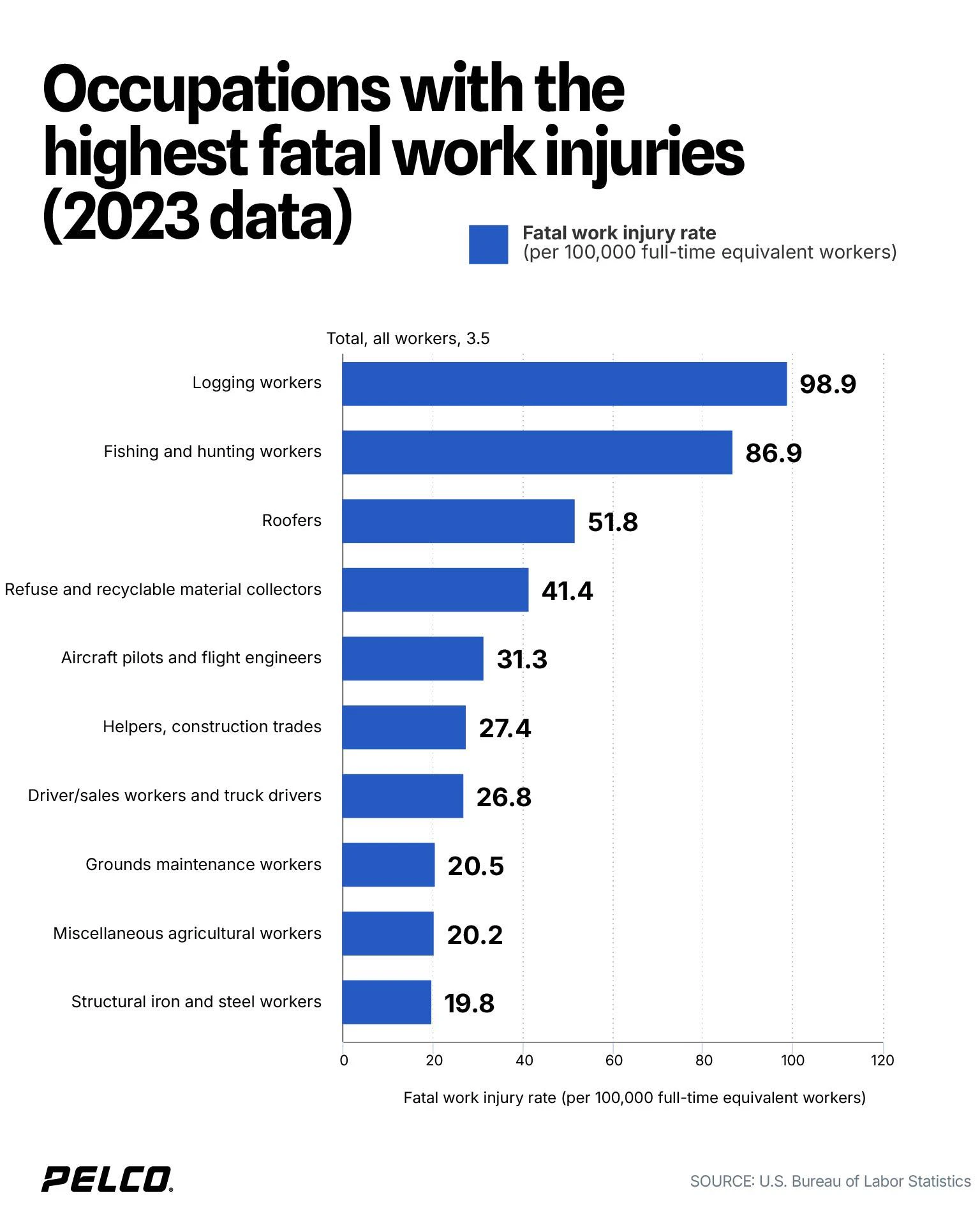
- Roofers: Highest rate of fatal injuries (more than 50 per 100,000 workers)11
- Helpers, construction trades: 27.4 per 100,000 workers
- Grounds maintenance workers: 20.5 per 100,000 workers
The table below outlines the data in more detail and covers different civilian occupations:
Safety metrics and reporting trends
Understanding construction safety metrics is key to improving site safety culture and reducing injury rates.
- Companies with strong safety programs report up to 70% fewer accidents.12
- OSHA estimates that for every $1 invested in workplace safety, companies can expect a return of $4 – $6.13
Construction companies need to invest in safety programs and safety audits on a regular basis. Most unions overseeing construction also have an obligation to ensure worker safety.
Global construction injury statistics
While this blog focuses heavily on U.S. data, here are select international stats for broader context:
- In the UK, the construction industry had 51 worker fatalities in 2023 – 2024, accounting for 26% of all workplace deaths.14
- In Canada, construction made up 21% of all workplace injuries in 2023.15
- The global construction death rate is estimated at 60,000 deaths per year, according to the International Labour Organization.16
Why construction injury statistics matter
Behind every number is a worker, a family and a community impacted by preventable incidents. These statistics underscore the ongoing need for safety training, awareness and investment in protective measures.
Sharing these facts, learning from them and applying them can create safer construction environments around the world. Whether you’re a safety officer, a contractor or a writer highlighting these risks, accurate information is the first step to progress.
Sources
- https://blogs.cdc.gov/niosh-science-blog/2024/02/05/ptd-construction‑2/
- https://www.enr.com/articles/57549-construction-nonfatal-injury-illness-rate-dips-as-cases-rise-slightly
- https://www.osha.gov/stop-falls
- https://www.usglassmag.com/small-companies-account-for-larger-share-of-construction-fatalities/
- https://scherandbassett.com/which-industries-have-most-workplace-injuries-in-u‑s/
- https://www.constructiondive.com/news/construction-deaths-2024-safety-bls/736002/
- https://www.holdrite.com/us/en/resources/blog/the-fatal-four-what-they-are-and-how-to-avoid-them
- https://www.bls.gov/opub/ted/2023/construction-deaths-due-to-falls-slips-and-trips-increased‑5 – 9‑percent-in-2021
- https://www.osha.gov/stop-falls
- https://www.contractorcompliance.io/post/oshas-top-10-most-cited-violations-fall-protection
- https://www.bls.gov/news.release/pdf/cfoi.pdf
- https://www.bls.gov/charts/census-of-fatal-occupational-injuries/civilian-occupations-with-high-fatal-work-injury-rates.htm
- https://www.hrfuture.net/talent-management/culture/how-hr-leads-the-way-in-building-a-safety-first-culture/
- https://www.tdi.texas.gov/tips/safety/oshatraining
- https://internationalfireandsafetyjournal.com/construction-industry-sees-increase-in-fatalities-in-2023 – 24
- https://www.worksafebc.com/en/about-us/news-events/news-releases/2024/April/worksafebc-inspectional-approach-construction-2024-aims-reduce-serious-injuries-fatalities
- https://www.ilo.org/resource/news/joint-press-release-ilowho-number-work-related-accidents-and-illnesses
FAQs
Have questions? We can help
Our video security experts can help you implement the right security system for your business.